火星のタートルロック
Turtle Rock on Mars
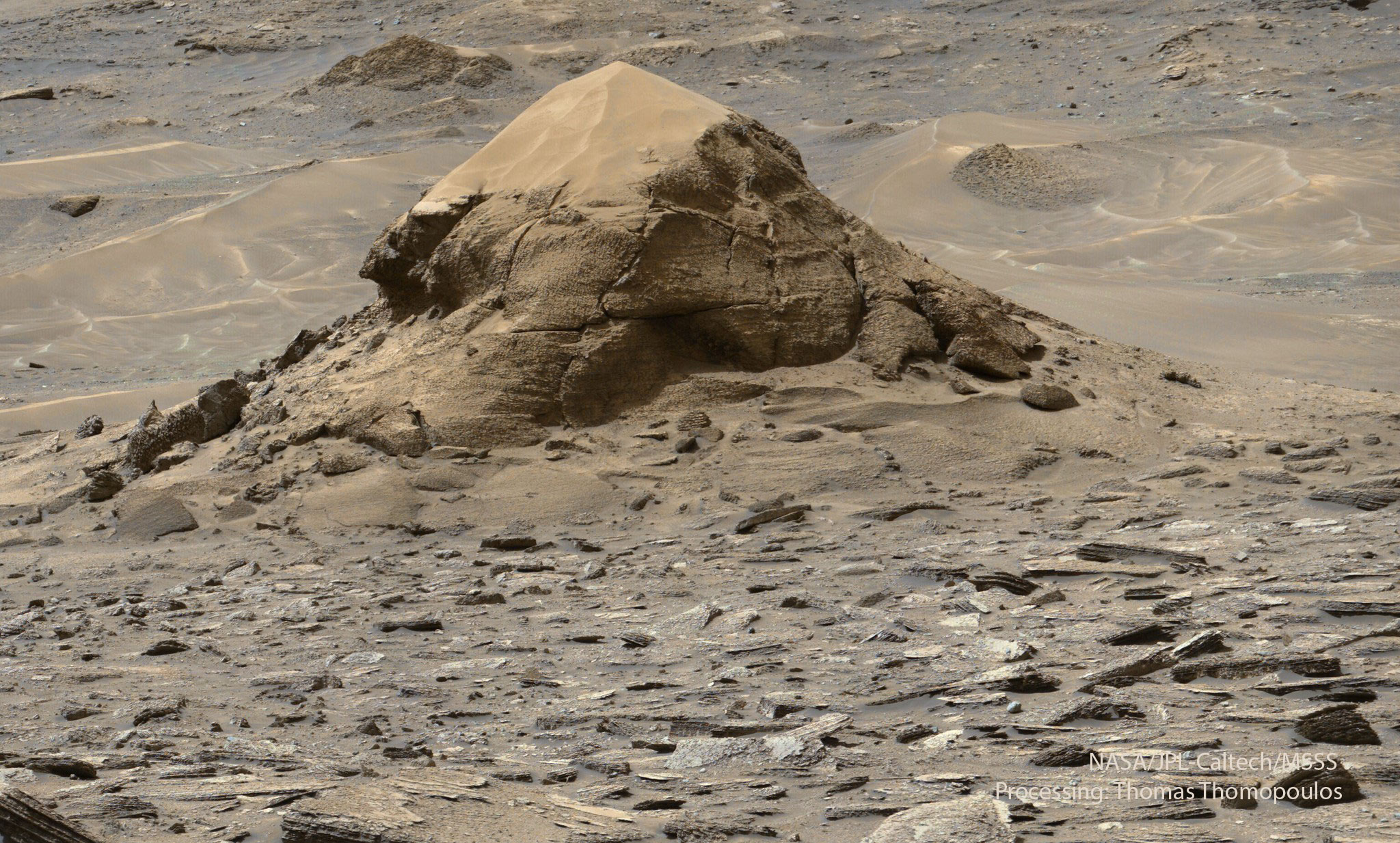
これは火星の化石化したカメでしょうか?いいえ。地球の大きなカメに似ていますが、これは火星にある層状の岩の露頭で、幅は約15メートルと推定されており、地球のカメよりもはるかに大きいのです。NASAの探査車キュリオシティは、火星探査4922日目に、先月この珍しい丘を発見し、ミラフローレスと名付けました。この小さな丘は、周囲の岩よりも何らかの理由で浸食に強く、生き残ったのかもしれません。最近の風によって、頂上はオレンジ色の火星の砂で覆われています。頂上の砂の下には、層状の岩石が何層にも重なって見え、これは風によって運ばれてきた砂が断続的に堆積し、地下水によって固められた長い歴史を示している可能性があります。中国のツァイダム砂漠のヤルダンなど、同様の風食によって形成された層状の地形は、地球上にも存在します。キュリオシティとその相棒であるパーサビアランスは、火星の古代史の調査を続けるとともに、原始生命の痕跡を探し続けている。
原文(English)
Is this a fossilized turtle on Mars? No. Although resembling a large Earth tortoise, this is a layered rock outcrop on Mars that is estimated to span about 15 meters, making it much larger than turtles on Earth. NASA’s robotic Curiosity rover came across this unusual mound, dubbed Miraflores, last month during its 4922nd Martian day exploring Mars. The small butte may survive because it was somehow more resistant to erosion than surrounding rock. More recent wind has now covered its top with orange Martian sand. Below the top shell, many layers of stratified rock are visible, possibly indicating a long history of intermittent wind-blown sand being deposited and then hardened by ground water. Similar wind-eroded layered landforms, such as yardangs in the Qaidam Desert of China, exist here on Earth. Curiosity and its companion rover Perseverance continue to investigate the ancient history of Mars as well as searching for signs of primeval life.
\ この感動を宇宙仲間にシェア /
宇宙をXでシェア
© NASA / APOD