かんむり座分子雲とシャンデリア星団
The Corona Australis Molecular Cloud and the Chandelier Cluster
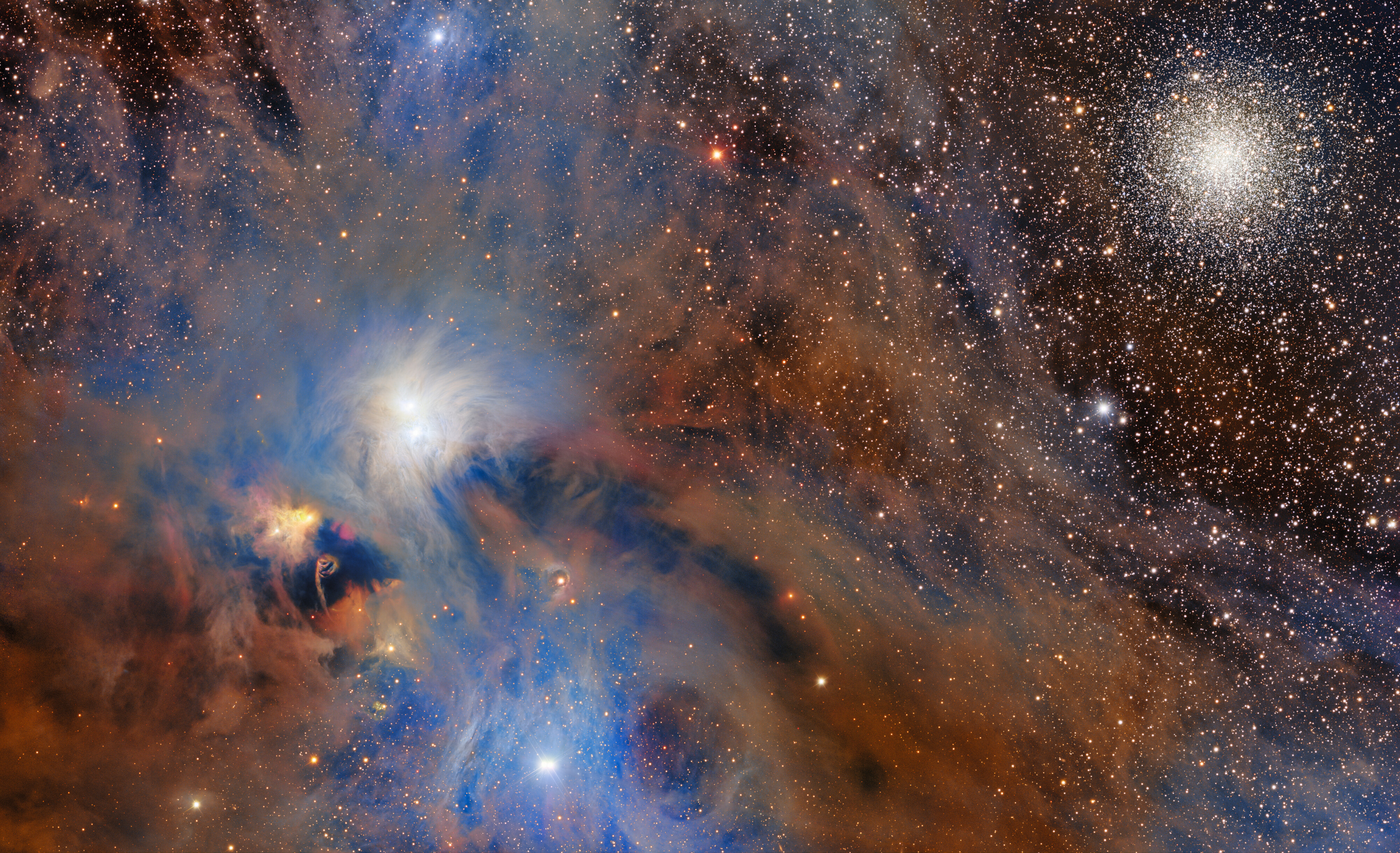
南冠座(かんむり座)は、若い星と古い星が織りなすまばゆいばかりの輝きを放っています。今日の画像の左側には、反射星雲と輝線星雲がコラージュのように集まっているかんむり座雲があります。地球から430光年離れたこの雲は、地球に最も近い星形成領域の1つです。この雲には、原始星に収縮するのに十分なほど冷たいガス(摂氏マイナス260度、華氏マイナス440度)が含まれています。最近形成された星は、周囲の物質に光が反射することで、雲全体に青い色合いを描き出します。Rかんむり座連星系のワルツは、星雲NGC 6729をかき混ぜます。この連星のうち若い方の星は、紫外線で近くのガスを電離させ、輝かせます。シャンデリア星団(NGC 6723)は右上にぶら下がっていますが、実際には、見かけ上の星形成領域よりも数万光年も遠くにあります。 NGC 6723では、幾度にもわたる星形成期を経て、やや若い星々が生み出された一方で、このシャンデリアには宇宙とほぼ同じくらい古い星々が瞬いている。
原文(English)
The Southern Crown (Corona Australis) dazzles with young and ancient celestial jewels. The Corona Australis Cloud is a collage of reflection and emission nebulae on the left of today’s image. At 430 light years away, this cloud is one of the closest star-forming regions to Earth. It contains gas cool enough (-260 Celsius or -440 Fahrenheit) to collapse into protostars. Recently formed stars paint blue hues across the cloud as their light reflects off surrounding material. The waltz of the R Coronae Australis binary system stirs up the nebula NGC 6729. The younger of the pair ionizes nearby gas with its ultraviolet light, causing it to glow. The Chandelier Cluster (NGC 6723) dangles from the top right, but is actually tens of thousands of light years farther away than its apparent star-forming neighbor. While NGC 6723 experienced multiple periods of star formation creating slightly younger stars, the chandelier twinkles with stars almost as old as the universe.
\ この感動を宇宙仲間にシェア /
宇宙をXでシェア
© NASA / APOD