拡大された火星
Magnified Mars
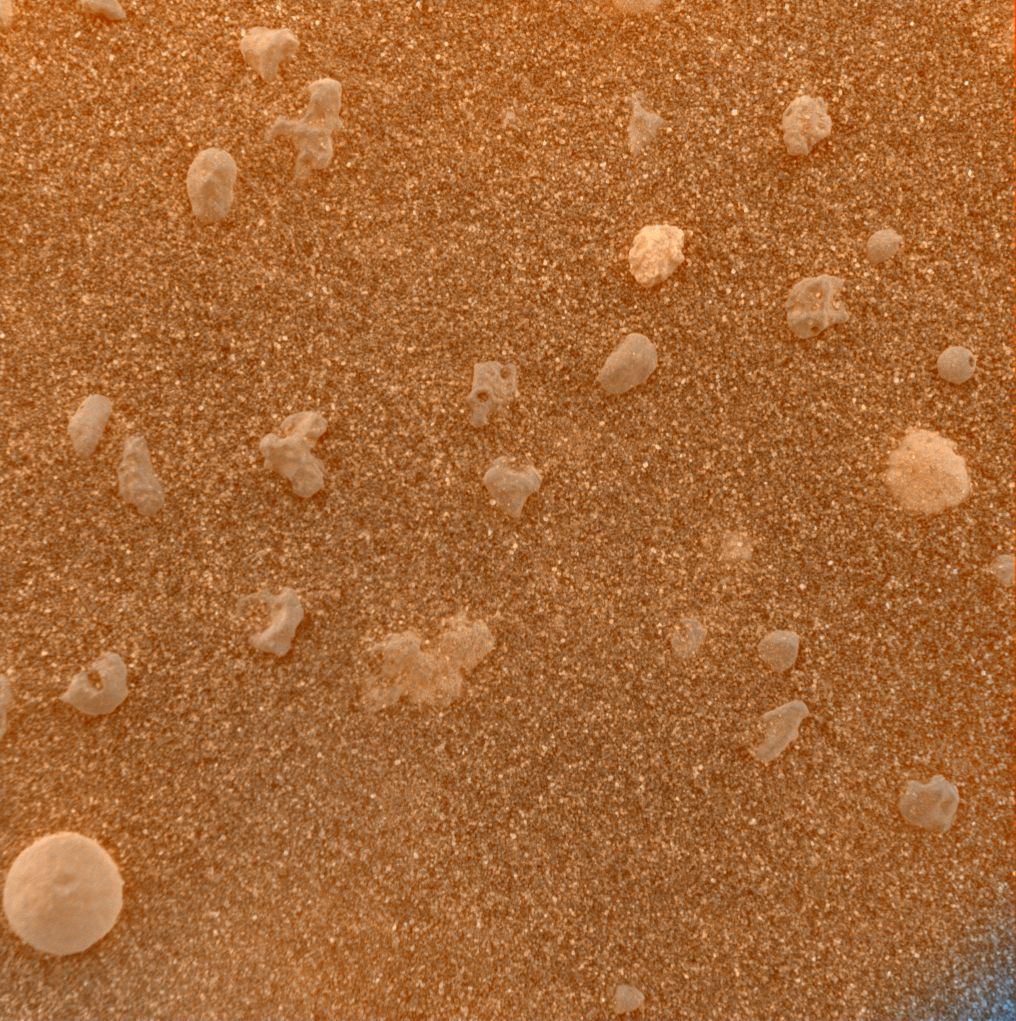
一見すると、この鮮明なカラーのクローズアップ写真は、砂浜に散らばった小石の強い印象を与える。しかし、この写真は、火星探査車オポチュニティが火星表面のメリディアニ平原で10日目に撮影した、他の惑星の最初の顕微鏡画像の一つである。土壌の塊は、直径約3センチメートル(1.2インチ)である。顕微鏡画像装置のオレンジ色のダストカバーを装着した状態と装着していない状態の土壌画像を合成することで、肉眼で見えるであろう色合いに近い色調で表示されている。火星に過去に水が存在した証拠を探している研究者たちは、左下にある印象的な円形の粒は、火山活動と水に関連した堆積過程の両方によって生成された可能性があると指摘している。しかし、他の調査によると、着陸機の近くの土壌には、火山岩によく見られる鉄含有鉱物であるカンラン石が含まれており、近くの岩の露頭周辺の土壌からは鉄鉱物である赤鉄鉱の痕跡が発見された。地球上では、赤鉄鉱はしばしば液体の水と関連して形成される。
原文(English)
At first glance, this sharp, color close-up gives the strong impression of pebbles strewn over a sandy beach. But the picture is one of the first microscopic images of another planet, captured by the Opportunity rover on its tenth sol on the martian surface at Meridiani Planum. The patch of soil measures about 3 centimeters (1.2 inches) across. It is shown in shades approximating what the eye might see, obtained by combining pictures of the soil with and without the microscopic imager's orange-tinted dust cover in place. Searching for evidence of past water on Mars, researchers note that both volcanic and water-related accretion processes could have produced the striking circular grain at the lower left. However, other investigations now indicate the soil near the lander contains olivine, an iron-bearing mineral common in volcanic rocks, while a signature of the iron mineral hematite was found in soil around a nearby rocky outcrop. On planet Earth, hematite often forms in association with liquid water.
\ この感動を宇宙仲間にシェア /
宇宙をXでシェア
© NASA / APOD