オポチュニティ探査車、古代火星は水に覆われていたことを示唆
Opportunity Rover Indicates Ancient Mars Was Wet
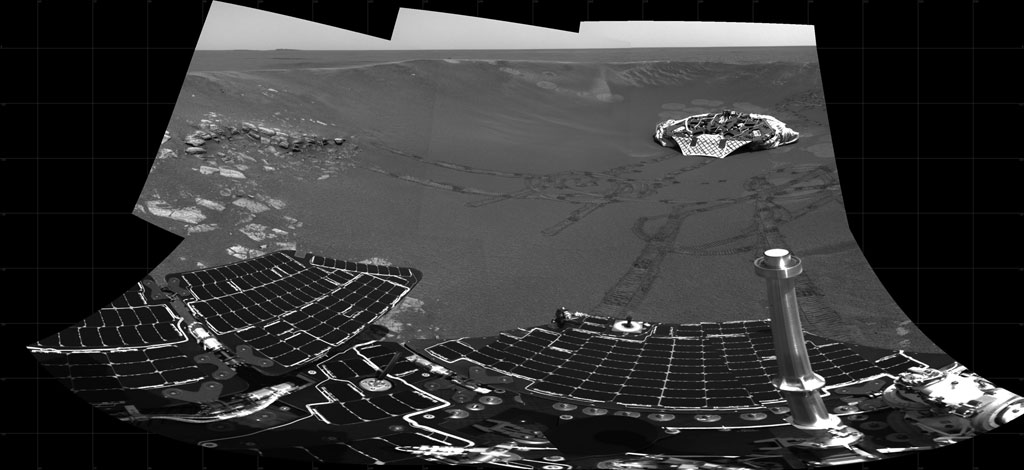
火星はかつて生命を支えるのに十分なほど湿潤だったのだろうか?この疑問に答えるため、NASAは火星に2つの探査車ミッションを打ち上げ、衛星画像から水に覆われていた可能性がある地域に着陸させた。昨日、火星探査車オポチュニティが着陸地点メリディアニ平原がかつてかなり湿潤だったことを示す証拠が多数発表された。液体の水がかつて流れていた証拠には、多くの岩石の物理的な外観、結晶が成長したと思われる窪みのある岩石、硫酸塩を含む岩石などがある。上の写真は、オポチュニティが今は空になった着陸船を振り返っているところ。水の存在を示す兆候が見られた明るい岩石の露頭と、オポチュニティが着陸した小さなクレーターの縁が見える。探査車は周辺を探査し続け、水がこの地域をどのように形作ったのか、その性質と範囲を解明しようとする。
原文(English)
Was Mars ever wet enough to support life? To help answer this question, NASA launched two rover missions to the red planet and landed them in regions that satellite images indicated might have been covered with water. Yesterday, mounting evidence was released indicating that the Mars Opportunity rover had indeed uncovered indications that its landing site, Meridiani Planum, was once quite wet. Evidence that liquid water once flowed includes the physical appearance of many rocks, rocks with niches where crystals appear to have grown, and rocks with sulfates. Pictured above, Opportunity looks back on its now empty lander. Visible is some of the light rock outcropping that yielded water indications, as well as the rim of the small crater where Opportunity landed. The rover will continue to explore its surroundings and try to determine the nature and extent that water molded the region.
\ この感動を宇宙仲間にシェア /
宇宙をXでシェア
© NASA / APOD