アイリス星雲のかすみ
Wisps of the Iris Nebula
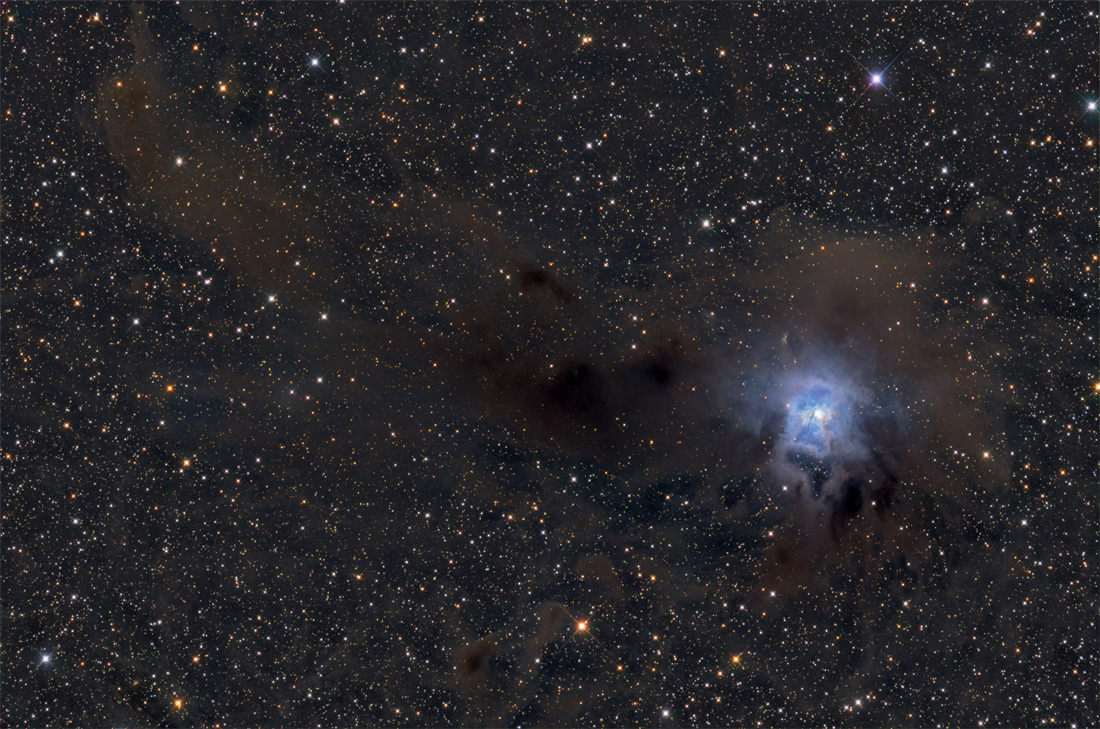
繊細な宇宙の花びらのように、これらの星間塵とガスの雲は、1,300光年離れたケフェウス座の豊かな星野で花開きました。アイリス星雲とも呼ばれ、NGC 7023としてきちんとカタログ化されているこの星雲は、空で花を連想させる唯一の星雲ではありません。それでも、この美しいデジタル画像は、アイリス星雲の色と対称性の範囲を印象的な詳細で示しています。アイリス星雲の中では、塵の星雲物質が、形成期の巨大で高温の若い星を取り囲んでいます。宇宙塵の中心のフィラメントは、一部の塵の粒子が星の目に見えない紫外線放射を効果的に可視の赤い光に変換するため、赤みがかった光ルミネセンスで輝いています。しかし、中心星雲の支配的な色は青で、これは星の光を反射する塵の粒子の特徴です。画像の左側には、暗く視界を遮る塵と冷たい分子ガスの雲があり、そのせいで複雑で幻想的な形状が浮かび上がってくる。赤外線観測によると、この星雲にはPAHと呼ばれる複雑な炭素分子が含まれている可能性がある。ここに示されているように、虹彩星雲の明るい青色の部分は、直径約6光年である。
原文(English)
Like delicate cosmic petals, these clouds of interstellar dust and gas have blossomed 1,300 light-years away in the fertile star fields of the constellation Cepheus. Sometimes called the Iris Nebula and dutifully cataloged as NGC 7023, this is not the only nebula in the sky to evoke the imagery of flowers. Still, this beautiful digital image shows off the Iris Nebula's range of colors and symmetries in impressive detail. Within the Iris, dusty nebular material surrounds a massive, hot, young star in its formative years. Central filaments of cosmic dust glow with a reddish photoluminescence as some dust grains effectively convert the star's invisible ultraviolet radiation to visible red light. Yet the dominant color of the central nebula is blue, characteristic of dust grains reflecting starlight. Dark, obscuring clouds of dust and cold molecular gas are present on the left of the image, and lead the eye to see other convoluted and fantastic shapes. Infrared observations indicate that this nebula may contain complex carbon molecules known as PAHs. As shown here, the bright blue portion of the Iris Nebula is about six light-years across.
\ この感動を宇宙仲間にシェア /
宇宙をXでシェア
© Thomas V. Davis / APOD