非常に塵の多い連星の事例
The Case of the Very Dusty Binary Star
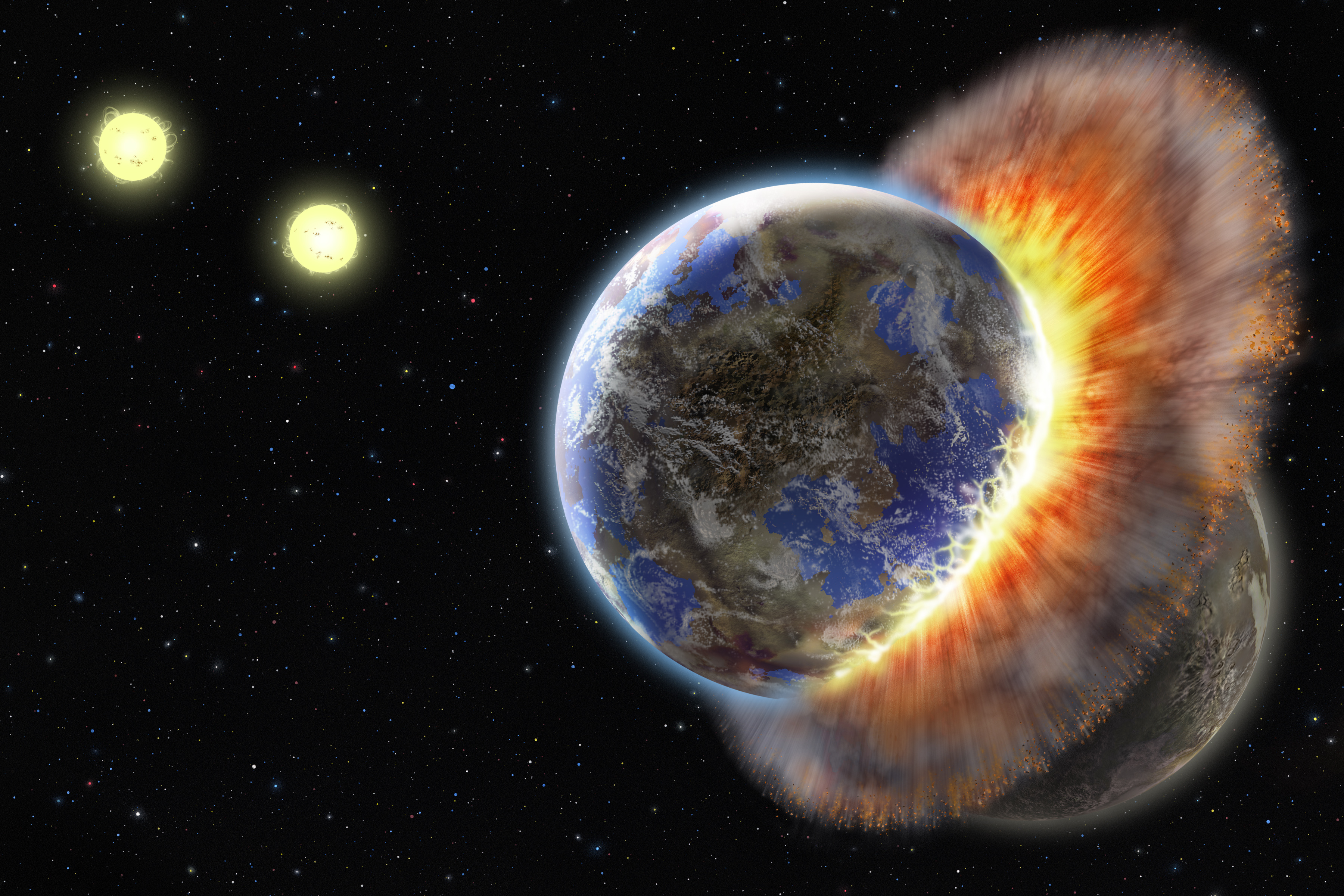
天文学者にとって、近接連星系BD+20 307は、当初、極めて塵が多いという点で注目されていました。周囲に大量の温かい塵が存在するため、赤外線波長では異常に明るく見えます。もちろん、惑星形成に伴う塵は、数百万歳程度の若い星の周囲でよく検出されます。しかし、BD+20 307系は少なくとも数十億年前のものであることが判明しており、これは私たちの太陽系の年齢に匹敵します。大量の温かい塵は、BD+20 307系で地球と金星ほどの大きさの惑星サイズの天体が比較的最近衝突した際の残骸である可能性が高いです。古典的なSF小説『When Worlds Collide』を彷彿とさせる劇的なイラストは、この破滅的な出来事を描写しています。皮肉なことに、この破壊的な惑星衝突の間接的な証拠は、近接連星の周囲に惑星系が形成される可能性があることを示す最初の兆候でもあるかもしれません。 BD+20 307は、おひつじ座の方向へ約300光年離れた場所に位置しています。
原文(English)
For astronomers, close binary star system BD+20 307 originally stood out because it is extremely dusty. A substantial amount of warm dust surrounding it causes the system to appear exceptionally bright at infrared wavelengths. Of course, dust associated with planet formation is often detected around young stars, stars only a few million years old. But the BD+20 307 system has now been found to be at least a few billion years old, an age comparable to the age of our own Solar System. The large amount of warm dust is likely the debris from a relatively recent collision of planet-sized objects on the scale of, say, Earth and Venus, in the BD+20 307 system. Reminiscent of the classic scifi novel When Worlds Collide, the dramatic illustration offers a depiction of the catastrophic event. Ironically, this indirect evidence of a destructive planetary collision could also be the first indication that planetary systems can form around close binary stars. BD+20 307 is about 300 light-years distant toward the headstrong constellation Aries.
\ この感動を宇宙仲間にシェア /
宇宙をXでシェア
© Lynette
Cook / APOD