AE Aurigaeと燃える星雲
AE Aurigae and the Flaming Star Nebula
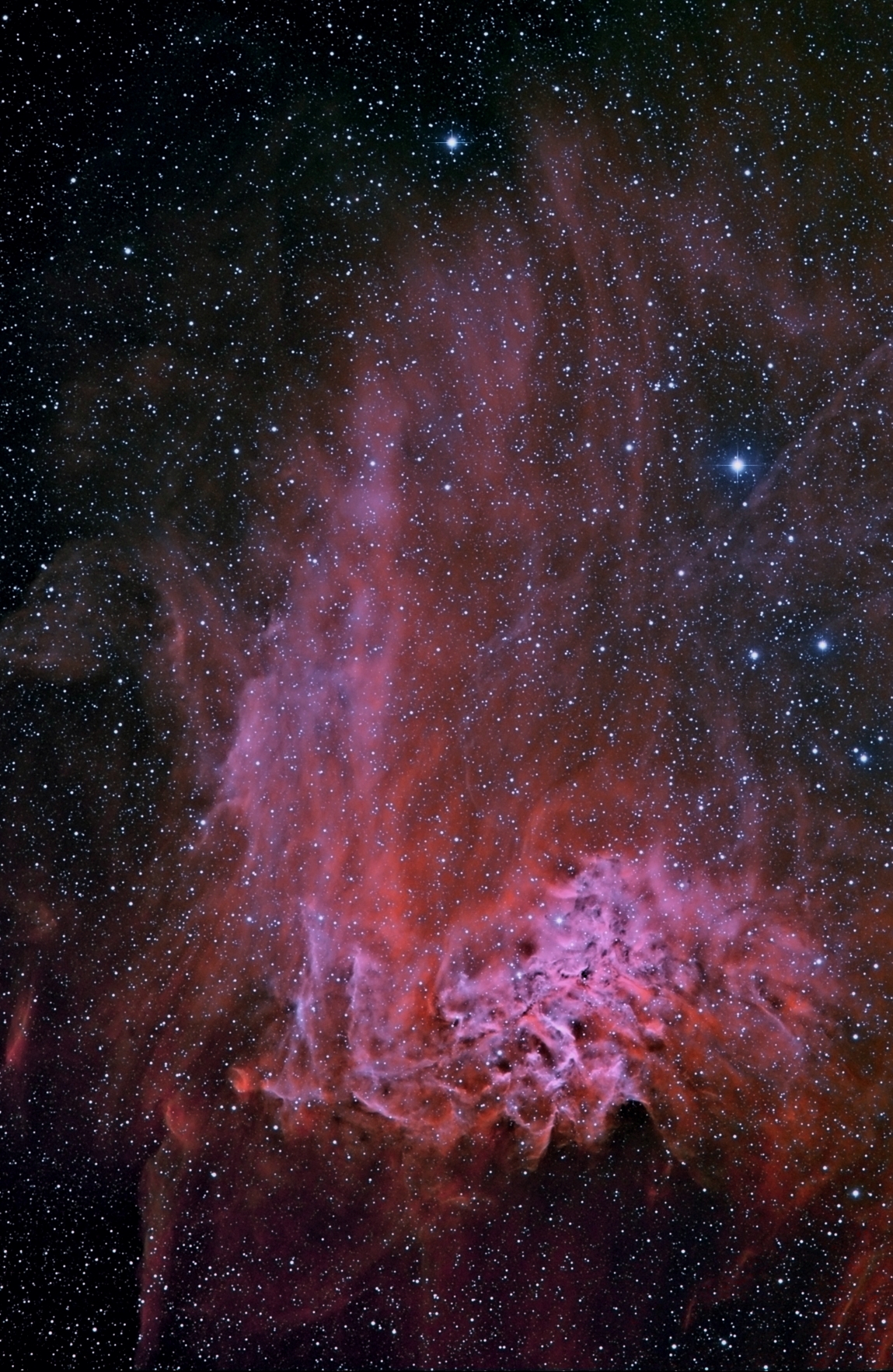
星AE Aurigaeは燃えているのでしょうか?いいえ。AE Aurigaeは「燃える星」と呼ばれ、周囲の星雲IC 405も「燃える星星雲」と呼ばれ、その領域には赤い煙が漂っているように見えますが、実際には火は燃えていません。火とは、一般的に酸素が分子レベルで急速に取り込まれる現象と定義されますが、これは十分な酸素が存在する場合にのみ起こり、星のような高エネルギーで低酸素の環境では重要ではありません。煙のように見える物質は主に星間水素ですが、炭素を豊富に含む塵の粒子からなる煙のような暗いフィラメントも含まれています。星雲の中心付近に見える明るい星AE Aurigaeは非常に高温で青色をしており、周囲のガスから電子をはじき飛ばすほどの強力な光を放出しています。陽子が電子を再び捕獲すると、周囲の輝線星雲に見られるように、赤い光が頻繁に放出されます。上に示した燃える星星雲は、地球から約1500光年離れた場所に位置し、直径は約5光年で、小型望遠鏡でもぎょしゃ座の方向に見ることができます。
原文(English)
Is star AE Aurigae on fire? No. Even though AE Aurigae is named the flaming star, the surrounding nebula IC 405 is named the Flaming Star Nebula, and the region appears to harbor red smoke, there is no fire. Fire, typically defined as the rapid molecular acquisition of oxygen, happens only when sufficient oxygen is present and is not important in such high-energy, low-oxygen environments such as stars. The material that appears as smoke is mostly interstellar hydrogen, but does contain smoke-like dark filaments of carbon-rich dust grains. The bright star AE Aurigae, visible near the nebula center, is so hot it is blue, emitting light so energetic it knocks electrons away from surrounding gas. When a proton recaptures an electron, red light is frequently emitted, as seen in the surrounding emission nebula. Pictured above, the Flaming Star nebula lies about 1,500 light years distant, spans about 5 light years, and is visible with a small telescope toward the constellation of the Charioteer (Auriga).
\ この感動を宇宙仲間にシェア /
宇宙をXでシェア
© Jorge Garcia / APOD