火星のアケロン窩の斜面の縞模様
Slope Streaks in Acheron Fossae on Mars
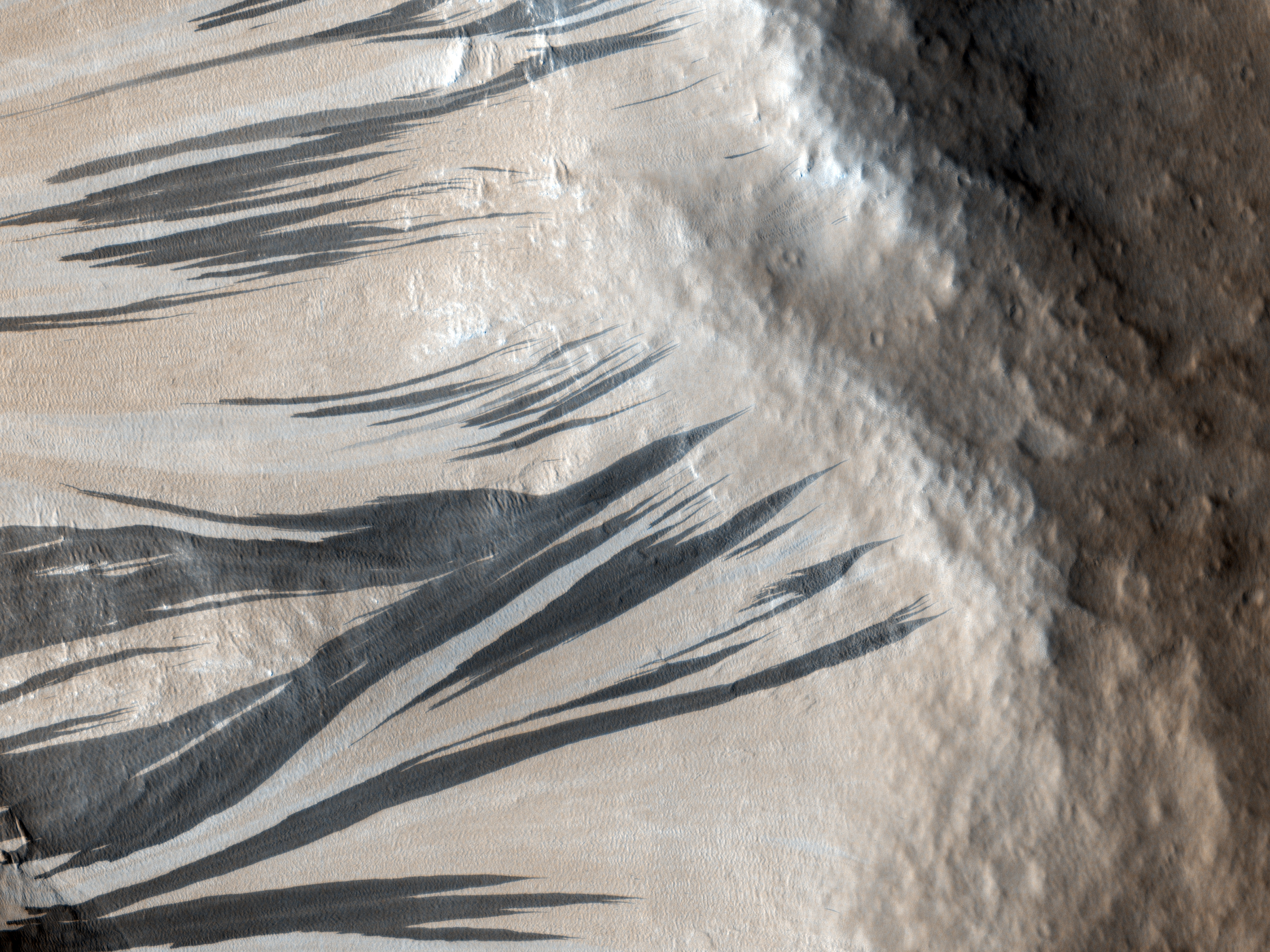
火星に見られるこれらの絵のように美しい暗い筋は、何によって作られるのでしょうか?確かなことは誰にもわかりません。有力な仮説の一つは、このような筋は、細かい砂が溝やクレーターの土手を滑り落ちることによって生じるというものです。上の写真では、暗い砂がアケロン・フォッサエの斜面を数百メートル流れ落ちたように見えます。砂は岩の周りを液体のように流れ、何らかの理由で時間の経過とともに著しく明るくなっています。この砂の流れのプロセスは、火星の表面を急速に変化させるいくつかのプロセスのうちの1つであり、他のプロセスには、塵旋風、砂嵐、氷の領域の凍結と融解などがあります。上の画像は、2006年から火星を周回している火星偵察オービターに搭載されたHiRiseカメラで撮影されました。アケロン・フォッサエは、火星のディアクリア四角形にある長さ700キロメートルの溝です。
原文(English)
What creates these picturesque dark streaks on Mars? No one knows for sure. A leading hypothesis is that streaks like these are caused by fine grained sand sliding down the banks of troughs and craters. Pictured above, dark sand appears to have flowed hundreds of meters down the slopes of Acheron Fossae. The sand appears to flow like a liquid around boulders, and, for some reason, lightens significantly over time. This sand flow process is one of several which can rapidly change the surface of Mars, with other processes including dust devils, dust storms, and the freezing and melting of areas of ice. The above image was taken by the HiRise camera on board the Mars Reconnaissance Orbiter which has been orbiting Mars since 2006. Acheron Fossae is a 700 kilometer long trough in the Diacria quadrangle of Mars.
\ この感動を宇宙仲間にシェア /
宇宙をXでシェア
© NASA / APOD