アイソン彗星のご紹介
Introducing Comet ISON
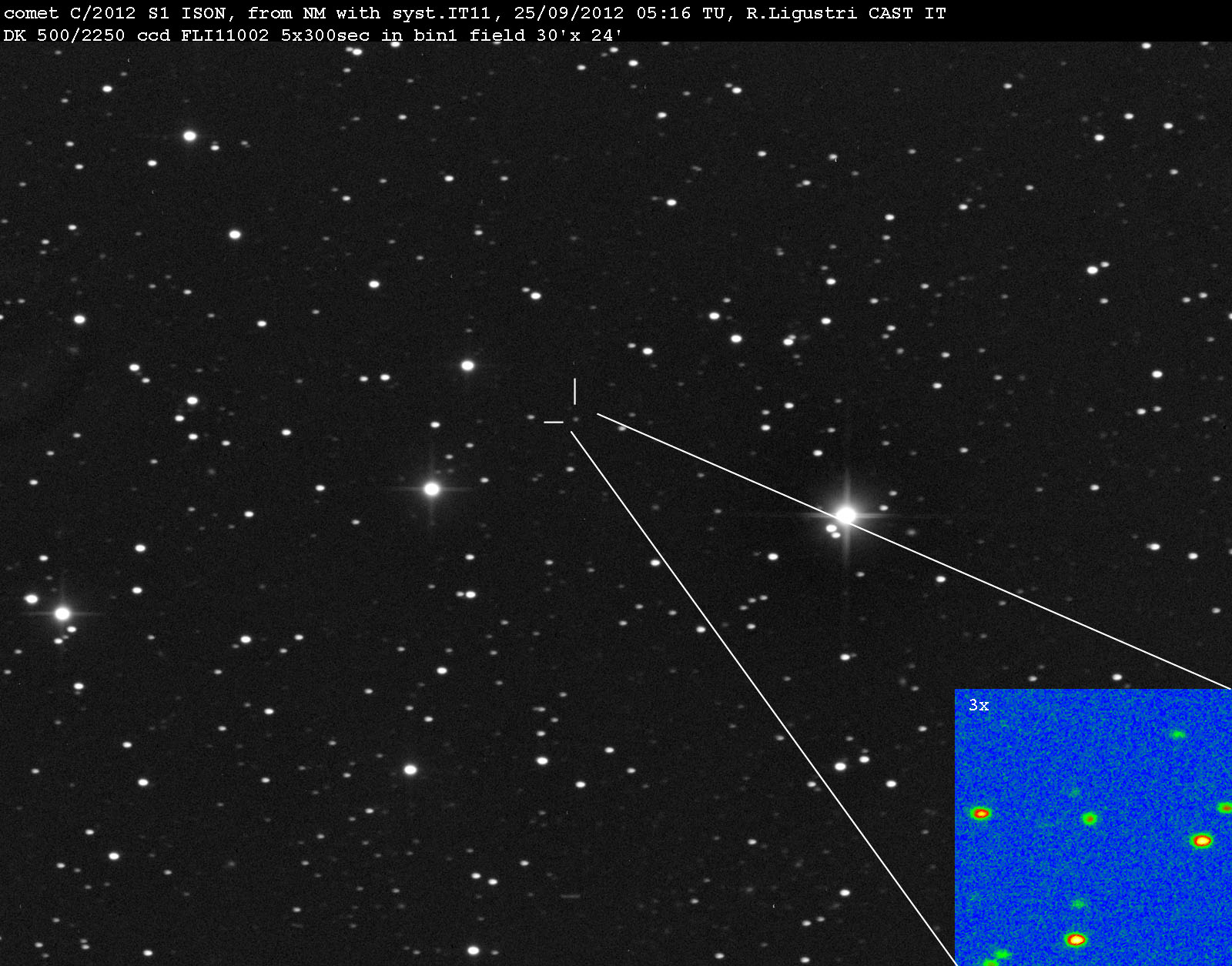
このかすかな点が、史上最も明るい彗星の1つに明るくなる可能性はあるだろうか?可能性はある。あるいは、彗星は太陽に近づくと分裂したり、はるかに控えめに明るくなる可能性もある。しかし、世界中の天文愛好家は、新しく発見されたC/2012 S1(ISON)が壮大な尾を発達させたり、2013年末に一時的に満月の明るさに近づいたりする可能性があるという、より楽観的な推測に沸き立っている。彗星ISONは現在非常に暗いが、上の画像では18等級でかろうじて見える。1週間ほど前にロシアでヴィタリ・ネフスキー(ベラルーシ)とアルチョム・ノヴィチョノク(ロシア)によって発見されたこの彗星は、現在、木星と土星の軌道の間から太陽に向かって落下している。2013年10月初旬には火星のすぐ近くを通過し、探査車や周回宇宙船から見える可能性がある。アイソン彗星は、2013年11月下旬に太陽表面から太陽直径以内の距離を通過する際に、太陽接近彗星となる見込みです。その後、生き残った彗星は2013年12月下旬に地球に最接近します。世界中の天文学者は、この巨大で汚れた雪玉のような彗星を綿密に追跡し、その性質や今後15ヶ月間の進化についてより深く理解しようとしています。
原文(English)
Could this dim spot brighten into one of the brightest comets ever? It's possible. Alternatively, the comet could break up when it gets closer to the Sun, or brighten much more modestly. Sky enthusiasts the world over are all abuzz, though, from the more optimistic speculations -- that the newly discovered C/2012 S1 (ISON) could develop a spectacular tail or briefly approach the brightness of the full Moon toward the end of 2013. Comet ISON currently is very faint but is just visible at magnitude 18 in the above image. The comet, discovered just over a week ago from Russia by Vitali Nevski (Belarus) and Artyom Novichonok (Russia), is currently falling toward the Sun from between the orbits of Jupiter and Saturn. In early 2013 October it will pass very near Mars and possibly be visible to rovers and orbiting spacecraft. Comet ISON appears on course to achieve sungrazer status as it passes within a solar diameter of Sun's surface in late 2013 November. Whatever survives will then pass nearest the Earth in late 2013 December. Astronomers around the world will be tracking this large dirty snowball closely to better understand its nature and how it might evolve during the next 15 months.
\ この感動を宇宙仲間にシェア /
宇宙をXでシェア
© Ligustri Rolando / APOD