チュリュモフ・ゲラシメンコ彗星からのジェット
Jets from Comet Churyumov-Gerasimenko
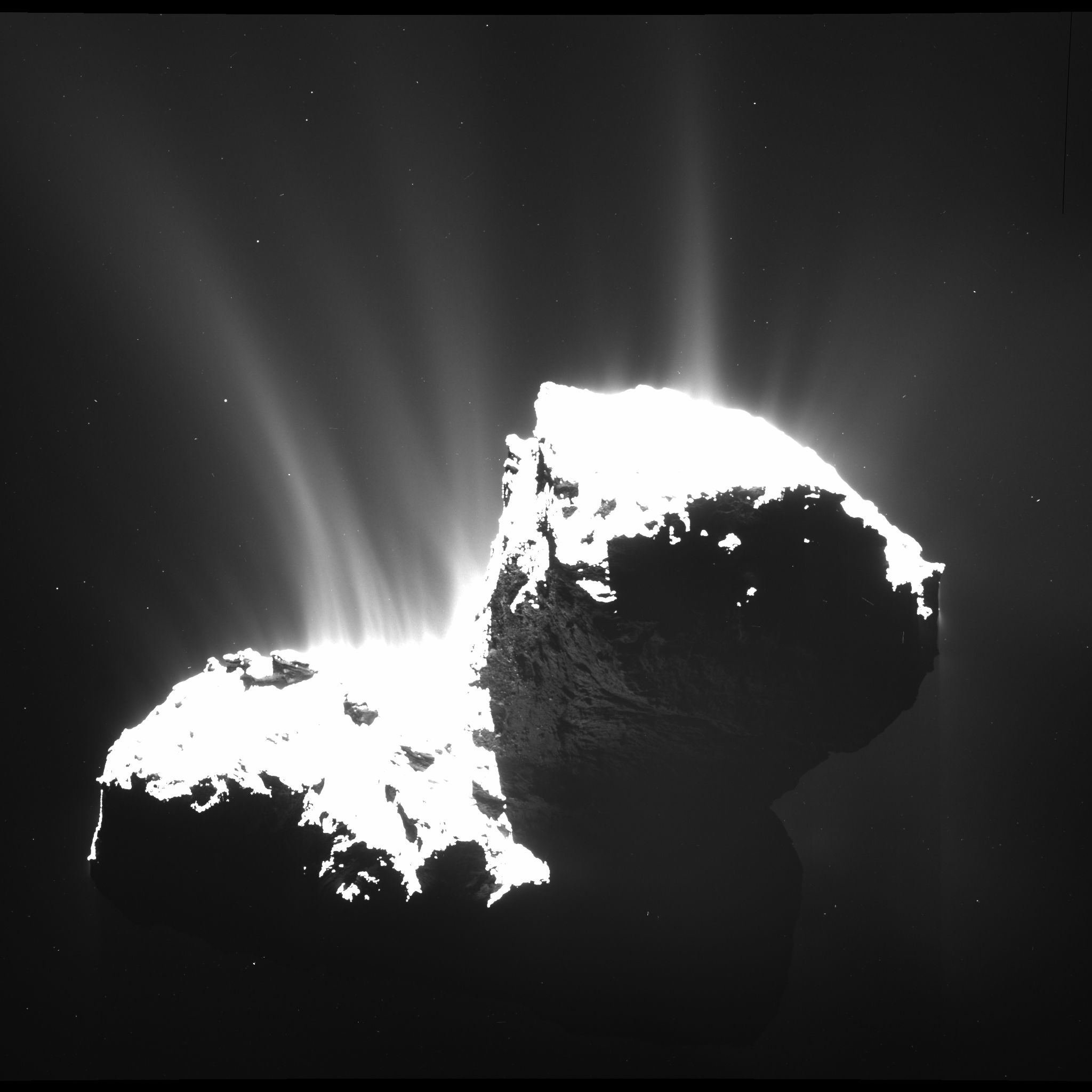
彗星の尾はどこから来るのでしょうか? 彗星の尾やコマが彗星の核から発生することはよく知られていますが、それがどのように起こるのかは活発な研究テーマです。噴出するジェットの最も優れた画像の一つが、昨年11月に彗星67P/チュリュモフ・ゲラシメンコ(彗星CG)の周回軌道上にあるロボット探査機ロゼッタによって撮影され、先月公開された特集画像に示されています。露出オーバーの画像には、彗星CGの核が太陽に近づいて加熱されるにつれて、核からガスと塵の噴煙が多数の場所から噴出している様子が写っています。彗星CGは現在、火星よりも太陽から遠い位置にありますが、今年の8月には軌道が地球にほぼ接近し、その時点でジェット活動が約100倍に増加すると予想されています。おそらく、あなたは以前にも彗星の核からの破片を見たことがあるでしょうが、それは別の形です。砂粒サイズの破片が流星として地球の大気に衝突して太陽系を通過する旅を終えたときです。 Almost Hyperspace: ランダムAPODジェネレーター
原文(English)
Where do comet tails come from? Although it is common knowledge that comet tails and comas originate from comet nuclei, exactly how that happens is an active topic of research. One of the best images yet of emerging jets is shown in the featured image, taken last November by the robotic Rosetta spacecraft in orbit around the Comet 67P/Churyumov-Gerasimenko (Comet CG), and released last month. The overexposed picture shows plumes of gas and dust escaping numerous places from the Comet CG's nucleus as it nears the Sun and heats up. Although Comet CG is currently further out from the Sun than Mars, its orbit will take it almost as close as the Earth this coming August, at which time its jet activity is expected to increase by a factor of about 100. You've likely seen some debris from comet nuclei before but in another form -- when sand-sized bits end their journey through the Solar System by impacting the atmosphere of Earth as meteors. Almost Hyperspace: Random APOD Generator
\ この感動を宇宙仲間にシェア /
宇宙をXでシェア
© NASA / APOD