ペリカン星雲のクローズアップ
Pelican Nebula Close-up
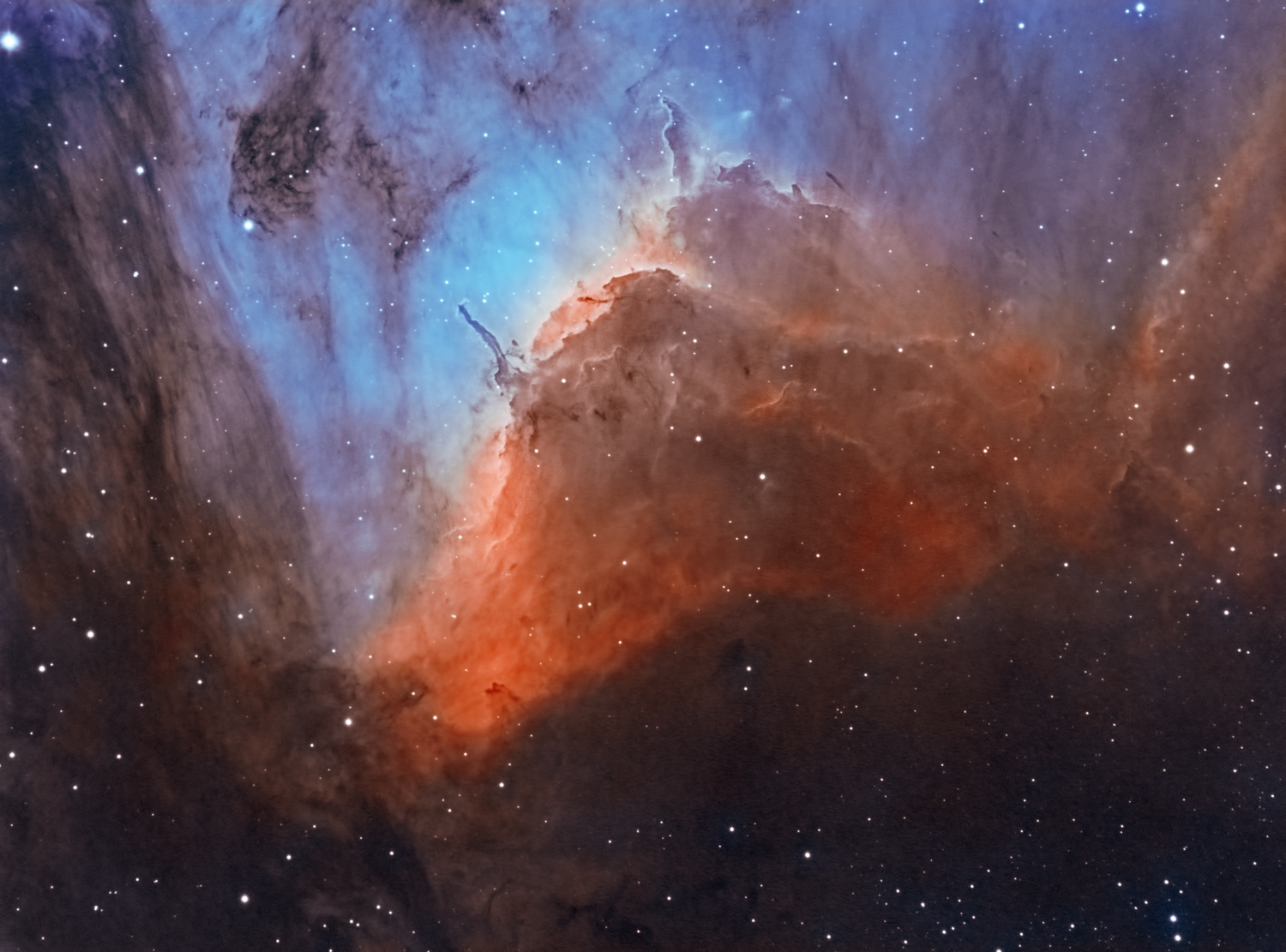
この鮮やかな星空に写る目立つ輝線の尾根は、IC 5067 と名付けられています。ペリカン星雲として知られる特徴的な形状のより大きな輝線領域の一部であるこの尾根は、約 10 光年にわたって広がり、宇宙のペリカンの頭と首の曲線に沿っています。この景色に現れる幻想的な暗い形は、若い高温の巨大な星からの高エネルギー放射によって形作られた、冷たいガスと塵の雲です。しかし、暗い形の中には星も形成されています。中央左にある長く暗い触手の先端から噴出する 2 つのジェットは、ハービッグ・ハロー 555 (HH 555) としてカタログ化されている埋め込まれた原始星の明らかな兆候です。実際、原始星の存在を示す他のハービッグ・ハロー天体もこのフレーム内に見られます。ペリカン星雲自体は IC 5070 としても知られ、約 2,000 光年離れています。それを見つけるには、はくちょう座の高く舞い上がる明るい星デネブの北東を見てください。
原文(English)
The prominent ridge of emission featured in this vivid skyscape is designated IC 5067. Part of a larger emission region with a distinctive shape, popularly called The Pelican Nebula, the ridge spans about 10 light-years and follows the curve of the cosmic pelican's head and neck. Fantastic, dark shapes inhabiting the view are clouds of cool gas and dust sculpted by energetic radiation from young, hot, massive stars. But stars are also forming within the dark shapes. Twin jets emerging from the tip of the long, dark tendril left of center are the telltale signs of an embedded protostar cataloged as Herbig-Haro 555 (HH 555). In fact, other Herbig-Haro objects indicating the presence of protostars are found within the frame. The Pelican Nebula itself, also known as IC 5070, is about 2,000 light-years away. To find it, look northeast of bright star Deneb in the high flying constellation Cygnus.
\ この感動を宇宙仲間にシェア /
宇宙をXでシェア
© Sara Wager / APOD