渦巻銀河NGC 1512:内側の環
Spiral Galaxy NGC 1512: The Inner Ring
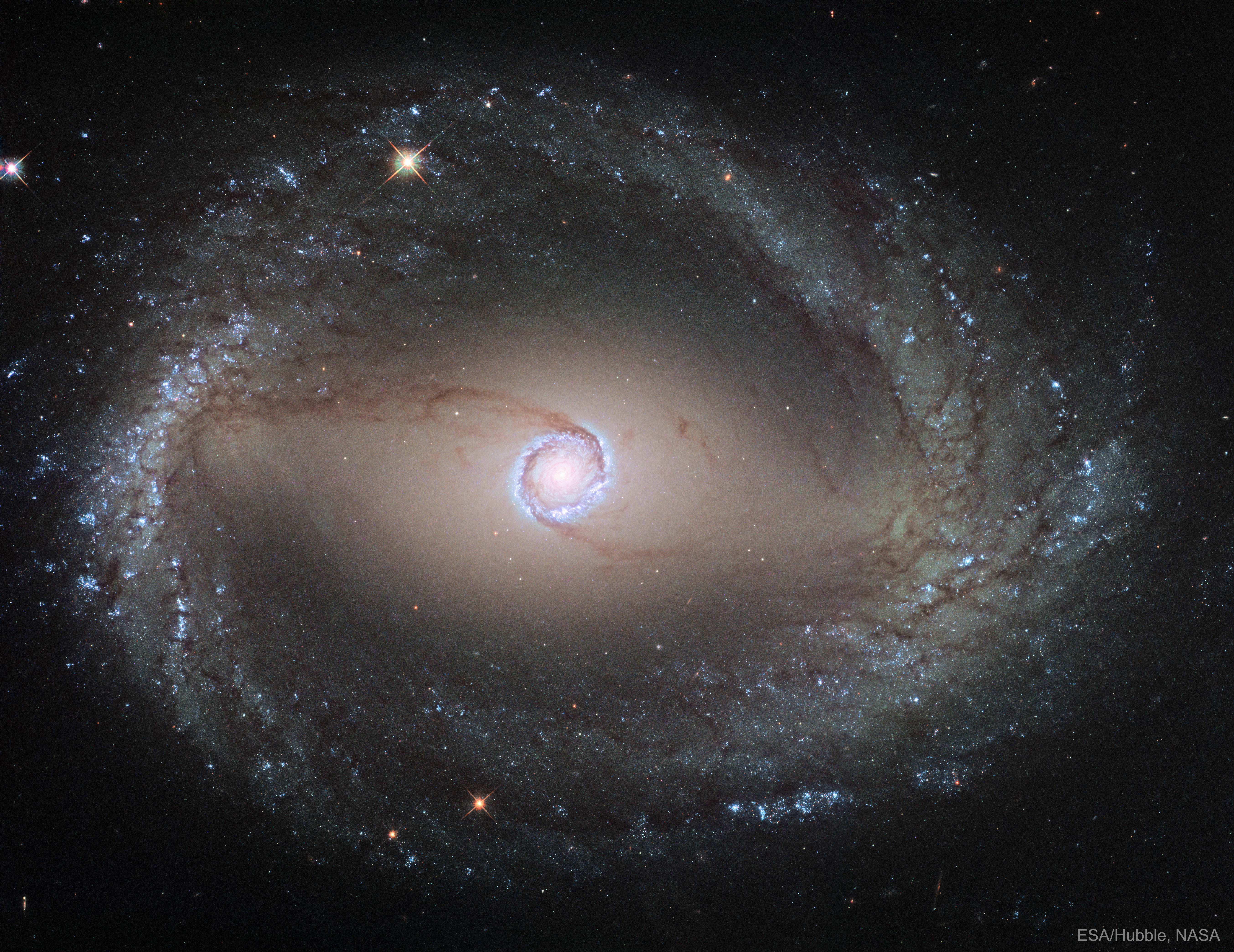
ほとんどの銀河にはリングがありませんが、なぜこの銀河には2つあるのでしょうか?まず、NGC 1512の中心付近にある明るい帯は核リングと呼ばれ、銀河の中心を取り囲み、最近形成された星々で明るく輝いています。しかし、ほとんどの星とそれに伴うガスや塵は、銀河の中心からずっと外側のリングを周回しています。ここでは画像の端付近に見えます。このリングは、直感に反して、内側リングと呼ばれています。よく見ると、この内側リングは、銀河を水平に横切る拡散した中心棒の両端をつないでいることがわかります。これらのリング構造は、NGC 1512自身の非対称性によって、長期にわたる進化と呼ばれるプロセスで生じたと考えられています。星の棒を含むこれらの銀河の非対称性の重力により、ガスや塵が内側リングから核リングに落下し、このリングの星形成率を高めています。渦巻銀河の中には、さらに外側を囲む第3の環を持つものもある。2週間後:アメリカで皆既日食が見られる。
原文(English)
Most galaxies don't have any rings -- why does this galaxy have two? To begin, the bright band near NGC 1512's center is a nuclear ring, a ring that surrounds the galaxy center and glows brightly with recently formed stars. Most stars and accompanying gas and dust, however, orbit the galactic center in a ring much further out -- here seen near the image edge. This ring is called, counter-intuitively, the inner ring. If you look closely, you will see this the inner ring connects ends of a diffuse central bar that runs horizontally across the galaxy. These ring structures are thought to be caused by NGC 1512's own asymmetries in a drawn-out process called secular evolution. The gravity of these galaxy asymmetries, including the bar of stars, cause gas and dust to fall from the inner ring to the nuclear ring, enhancing this ring's rate of star formation. Some spiral galaxies also have a third ring -- an outer ring that circles the galaxy even further out. Two Weeks from Today: An American total eclipse of the Sun
\ この感動を宇宙仲間にシェア /
宇宙をXでシェア
© NASA / APOD