『あつまれ どうぶつの森』のウルティマ・トゥーレ
Ultima Thule from New Horizons
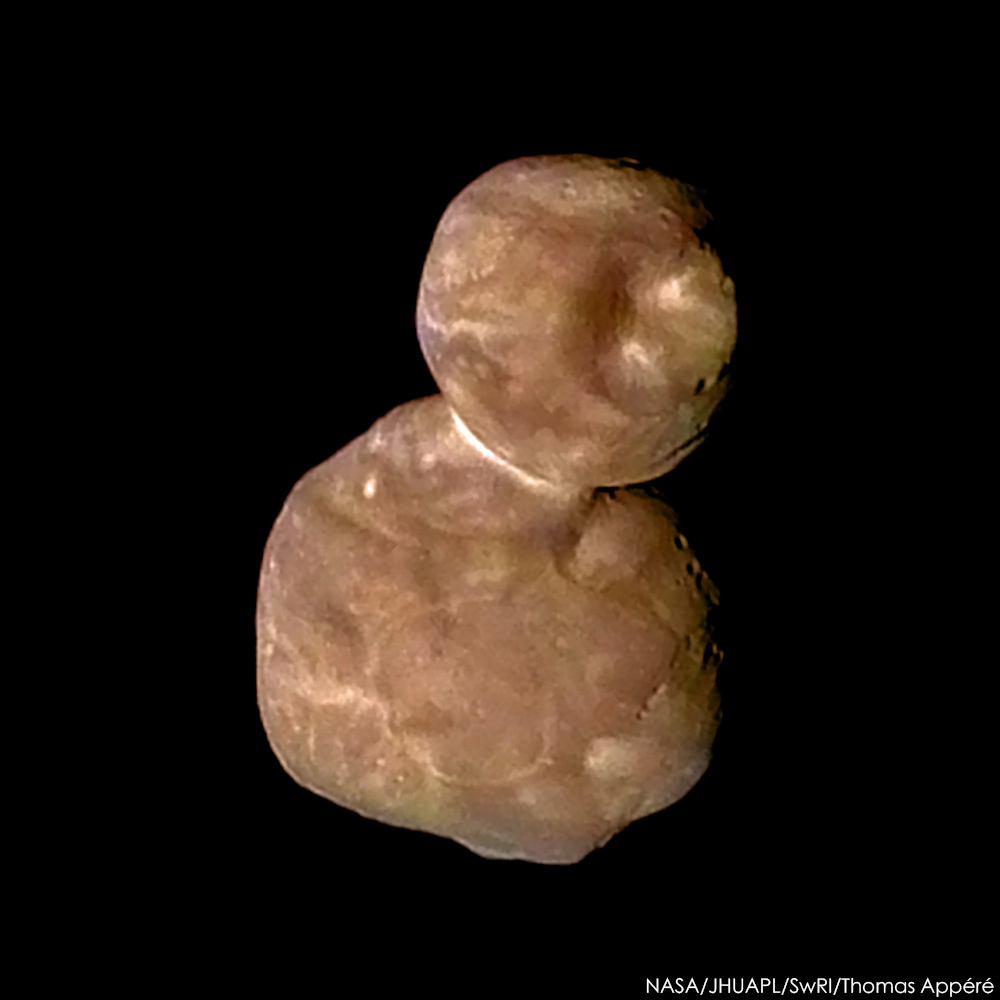
遠く離れた小惑星は、太陽の近くにある小惑星とどのように異なるのでしょうか?その解明のため、NASAはロボット探査機ニュー・ホライズンズを、古典的なカイパーベルト天体2014 MU69(愛称ウルティマ・トゥーレ)のそばに送り込みました。ウルティマ・トゥーレは、人類の宇宙船が訪れた小惑星としてはこれまでで最も遠いものです。1月1日に全長30kmのこの小惑星のそばを通過した際、掲載されている画像は、これまでに送られてきたウルティマ・トゥーレの表面の最高解像度の画像です。ウルティマ・トゥーレは、表面の独特な質感、比較的少ないクレーター、ほぼ球形のローブなど、太陽系内側の小惑星とは明らかに異なって見えます。その形状は、太陽系初期の残骸が合体してウルティマとトゥーレという2つの天体となり、その後螺旋状に合体してくっついたと考えられています。ウルティマ・トゥーレのさまざまな表面領域の起源、薄い大気の有無、赤い色になった経緯、そしてこの古代太陽系の新たな知識が地球の形成について何を教えてくれるのかなど、研究は続けられます。
原文(English)
How do distant asteroids differ from those near the Sun? To help find out, NASA sent the robotic New Horizons spacecraft past the classical Kuiper belt object 2014 MU69, nicknamed Ultima Thule, the farthest asteroid yet visited by a human spacecraft. Zooming past the 30-km long space rock on January 1, the featured image is the highest resolution picture of Ultima Thule's surface beamed back so far. Ultima Thule does look different from imaged asteroids of the inner Solar System, as it shows unusual surface texture, relatively few obvious craters, and nearly spherical lobes. Its shape is hypothesized to have formed from the coalescence of early Solar System rubble in into two objects -- Ultima and Thule -- which then spiraled together and stuck. Research will continue into understanding the origin of different surface regions on Ultima Thule, whether it has a thin atmosphere, how it obtained its red color, and what this new knowledge of the ancient Solar System tells us about the formation of our Earth.
\ この感動を宇宙仲間にシェア /
宇宙をXでシェア
© NASA / APOD