ロケットが波打つ太陽を通過する
Rocket Transits Rippling Sun
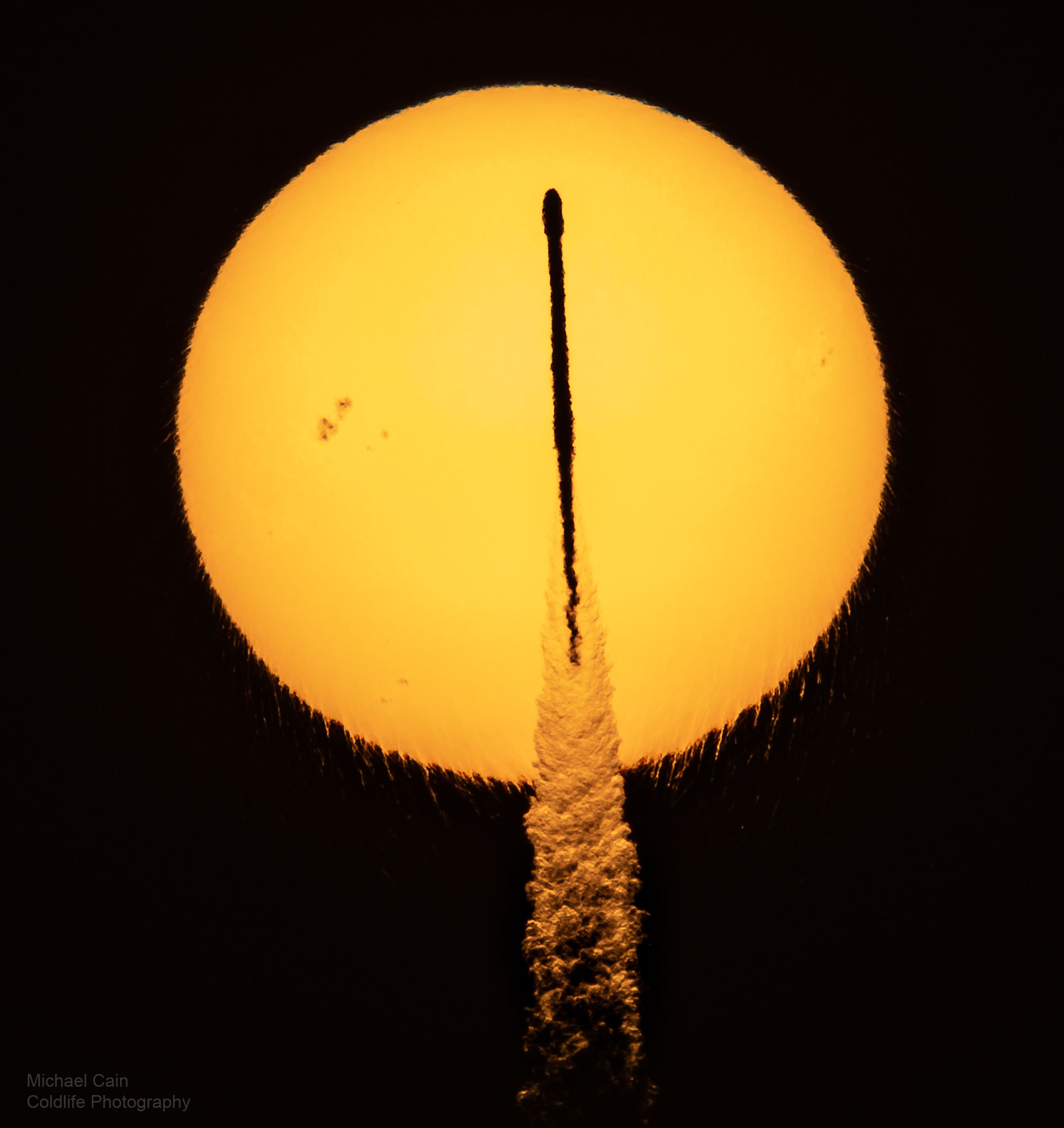
日の出時にロケットを打ち上げると、ロケットと太陽の両方が写った珍しいが興味深い画像が得られることがある。先月、NASAのケネディ宇宙センターからSpaceXのファルコン9ロケットが53基のスターリンク衛星を低軌道に打ち上げた際もそうだった。この打ち上げ写真では、ロケットの排気プルームが遠くの太陽に投影された範囲を超えて輝き、ロケット自体が奇妙なギザギザに見え、太陽の下端には独特の滴りのような波紋が見られる。これらの効果の物理的な原因は、比較的高温または希薄な空気の塊が、比較的低温または圧縮された空気の塊よりも太陽光を弱く屈折させることである。地球上のショーに気づかないまま、左上にある活動的な黒点領域3014はゆっくりと太陽を横切っていく。
原文(English)
The launch of a rocket at sunrise can result in unusual but intriguing images that feature both the rocket and the Sun. Such was the case last month when a SpaceX Falcon 9 rocket blasted off from NASA's Kennedy Space Center carrying 53 more Starlink satellites into low Earth orbit. In the featured launch picture, the rocket's exhaust plume glows beyond its projection onto the distant Sun, the rocket itself appears oddly jagged, and the Sun's lower edge shows peculiar drip-like ripples. The physical cause of all of these effects is pockets of relatively hot or rarefied air deflecting sunlight less strongly than pockets relatively cool or compressed air: refraction. Unaware of the Earthly show, active sunspot region 3014 -- on the upper left -- slowly crosses the Sun.
\ この感動を宇宙仲間にシェア /
宇宙をXでシェア
© Michael Cain / APOD