鉛筆星雲超新星衝撃波
The Pencil Nebula Supernova Shock Wave
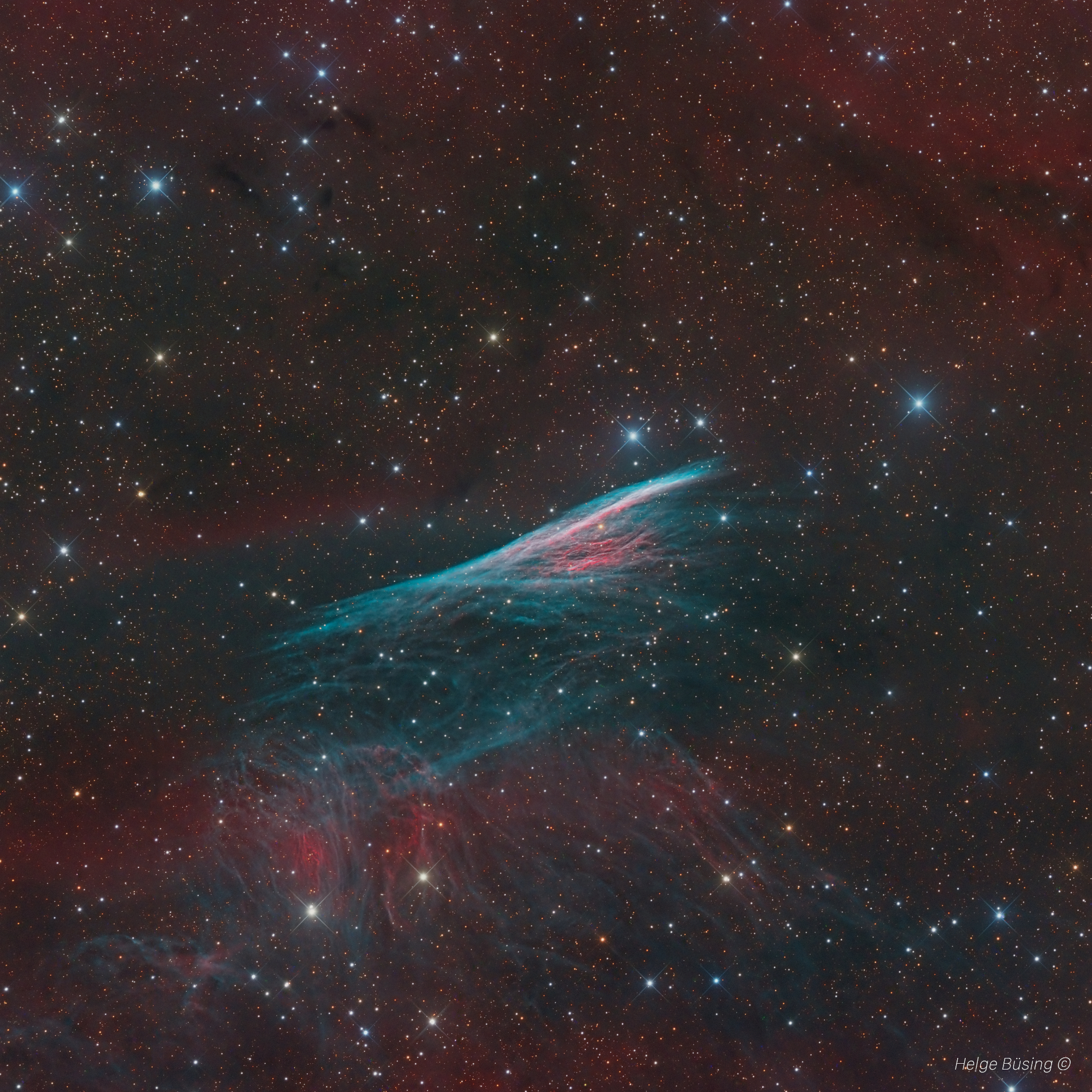
この超新星の衝撃波は、時速 50 万キロメートルを超える速度で星間空間を突き進んでいます。鮮明なカラー合成画像の中心に位置し、上向きに動いている細く明るい編み込み状のフィラメントは、実際には、ほぼ真横から見た輝くガスの宇宙シートの長い波紋です。1840 年代にジョン・ハーシェル卿によって発見されたこの細長い星雲は、ハーシェル光線として知られています。NGC 2736 としてカタログ化されているこの星雲は、尖った形状から、現代の通称である鉛筆星雲と呼ばれています。鉛筆星雲は約 800 光年離れています。長さが 5 光年近くあるこの星雲は、ベラ超新星残骸のごく一部にすぎません。巨大なベラ残骸自体は直径約 100 光年で、約 11,000 年前に爆発した星の膨張する残骸雲です。当初、鉛筆星雲として観測された衝撃波の一部は、毎時数百万キロメートルもの速度で移動していたが、その後大幅に減速し、周囲の星間物質を掃き集めている。
原文(English)
This supernova shock wave plows through interstellar space at over 500,000 kilometers per hour. Centered and moving upward in the sharply detailed color composite its thin, bright, braided filaments are actually long ripples in a cosmic sheet of glowing gas seen almost edge-on. Discovered in the 1840s by Sir John Herschel, the narrow-looking nebula is sometimes known as Herschel's Ray. Cataloged as NGC 2736, its pointed appearance suggests its modern popular name, the Pencil Nebula. The Pencil Nebula is about 800 light-years away. Nearly 5 light-years long it represents only a small part of the Vela supernova remnant though. The enormous Vela remnant itself is around 100 light-years in diameter, the expanding debris cloud of a star that was seen to explode about 11,000 years ago. Initially, the section of the shock wave seen as the Pencil nebula was moving at millions of kilometers per hour but has slowed considerably, sweeping up surrounding interstellar material.
\ この感動を宇宙仲間にシェア /
宇宙をXでシェア
© Helge Buesing / APOD